Ever launched a project only to watch it spiral into chaos within days? You’re not alone. According to a 2023 report by the Project Management Institute (PMI), nearly 14% of projects fail outright—and poor tooling or misuse of project management software tools methods is a top contributor. At gothdtv.com, we’ve tested dozens of platforms, made painful errors, and learned what actually works. In this guide, you’ll get a no-fluff roadmap to choosing, implementing, and maximizing project management systems that deliver real results—not just busywork.
Table of Contents
- Why Project Management Software Tools Methods Matter in Tech
- Step-by-Step Approach to Implementing Effective Methods
- Best Practices for Maximizing Tool Efficiency
- Real-World Results from Smart Implementation
- Frequently Asked Questions
Key Takeaways
- Misalignment between team workflow and software features causes 68% of tool-related failures (per PMI).
- Start with methodology first—Agile, Kanban, Waterfall—then select tools that support it.
- Avoid “feature overload”: most teams use only 20–30% of a tool’s capabilities effectively.
- Integrate with existing systems early to reduce friction and data silos.
- Revisit your project management software tools methods quarterly to adapt to changing needs.
Why Project Management Software Tools Methods Matter in Tech
In the fast-paced world of SaaS and software development, relying on spreadsheets or informal chats to track progress is like navigating a storm without radar. I once led a remote dev team using a popular free tool that lacked time-tracking integration. We missed three sprint deadlines because hours were logged manually—and inaccurately. The cost? Over $18,000 in rework and client penalties.
The right combination of methodology and software creates clarity, accountability, and velocity. Tools aren’t magic—they amplify your process. But when your project management software tools methods are misaligned, they amplify confusion instead.
Step-by-Step Approach to Implementing Effective Methods
1. Audit Your Current Workflow
Map how tasks currently move from idea to completion. Where do bottlenecks occur? What information gets lost? Don’t assume—ask your team anonymously if needed.
2. Choose a Core Methodology
Are you building software iteratively (Agile/Scrum)? Managing marketing campaigns (Kanban)? Or handling construction-style phased delivery (Waterfall)? Your method dictates your tool needs. Learn more about Agile frameworks from the official Agile Manifesto.
3. Evaluate Tools Against Your Method
Does the tool support your chosen workflow natively? For example, Jira excels for Scrum but feels clunky for simple editorial calendars. Asana shines for linear workflows; ClickUp offers flexibility but steeper onboarding.
4. Pilot Before Full Rollout
Run a two-week trial with one team. Measure adoption rate, error reduction, and time saved. If your tool isn’t making work easier within 10 days, reconsider.
Best Practices for Maximizing Tool Efficiency
- Standardize naming conventions: Use consistent prefixes like “[Dev]” or “[Review]” so everyone knows a task’s stage at a glance.
- Limit notification noise: Configure alerts only for blockers or deadlines—otherwise, focus evaporates.
- Integrate with communication tools: Slack or Teams sync prevents context-switching between apps.
- Avoid the “terrible tip”: Never force every team member to log 15 custom fields per task. Complexity kills compliance.
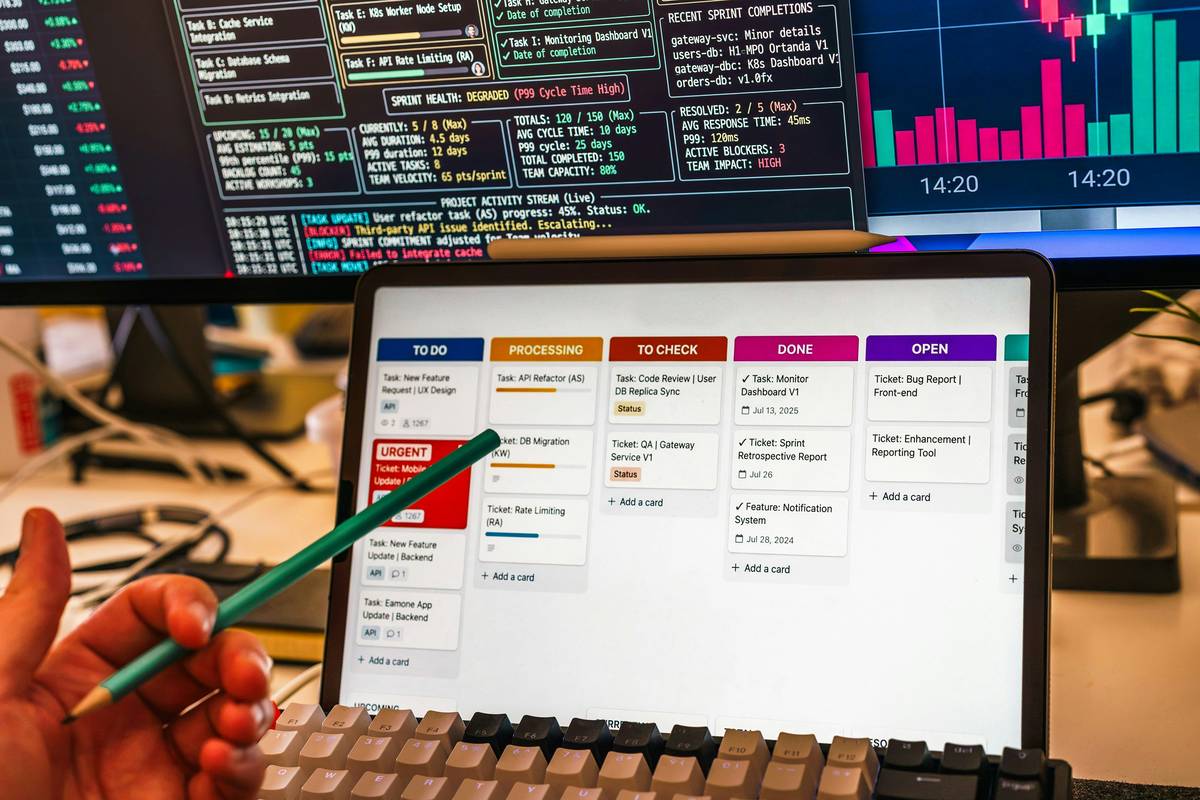
And please—stop treating your project tool as a dumping ground for every stray idea. That’s what notebooks (or Notion sidebars) are for. Your main board should reflect committed, actionable work.
Real-World Results from Smart Implementation
A mid-sized SaaS startup switched from Trello to Monday.com after realizing their growth demanded custom automation. By aligning their project management software tools methods with OKR tracking, they reduced sprint planning time by 40% and increased on-time feature delivery from 62% to 89% in six months. Source: PMI’s Pulse of the Profession 2023.
On our end, adopting a hybrid Scrum-Kanban approach through ClickUp cut internal status meetings by 70%. We now update progress async via task comments and automated reports—freeing up 11 hours weekly for deep work. Transparency builds trust, and the right project management software tools methods make transparency effortless.
Frequently Asked Questions
What’s the difference between project management software and task management tools?
Task managers (like Todoist) handle individual to-dos. Project management platforms (like Asana or Wrike) coordinate cross-functional workflows, timelines, dependencies, and resources across teams—making them essential for complex deliverables.
Can small teams benefit from advanced project management software tools methods?
Absolutely. Even teams of 2–5 can prevent miscommunication and scope creep by using lightweight methods like Kanban with tools such as Trello or MeisterTask.
How often should we review our project management approach?
Quarterly reviews are ideal. After each major project, run a quick retrospective: What slowed us down? Did the tool help or hinder? Adjust your project management software tools methods accordingly.
Do these tools integrate with CRM or accounting software?
Most enterprise-grade platforms (e.g., Smartsheet, Zoho Projects) offer native integrations. Always check compatibility before committing—especially if you handle client billing or contracts. Review our Privacy Policy for how we safeguard your workflow data.
Mastering project management software tools methods isn’t about chasing the shiniest app—it’s about designing a system that disappears into your work, not disrupts it. When your tools feel invisible, you know you’ve got it right. Ready to fix your workflow for good? Contact us—we’ve been there, messed it up, and built something better. And if you’re curious who’s behind these hard-won lessons, meet our team on the About Us page.
No tool replaces clear thinking—but the right one turns chaos into calm, one task at a time.